




Best Website Builder
I test every website builder so you don’t have to. These are my rankings of the best website builders for 2026.
Our work is supported by affiliate commissions. Learn More
Our work is supported by affiliate commissions. Learn More
We tested dozens of website builders and fitness platforms to find the best options for gyms, studios, and personal trainers.
We focused on two things:
We narrowed it down to the four best fitness website builders.
Best overall website builder for fitness websites.
A flexible and powerful option for gyms, multi-instructor studios, and more.
The budget winner for simple fitness websites.
Operation-first platform with a limited website builder.

Squarespace Overview (1:30)
Best for: Studios and trainers who want a premium-looking site that’s easy to maintain (and converts well on mobile).
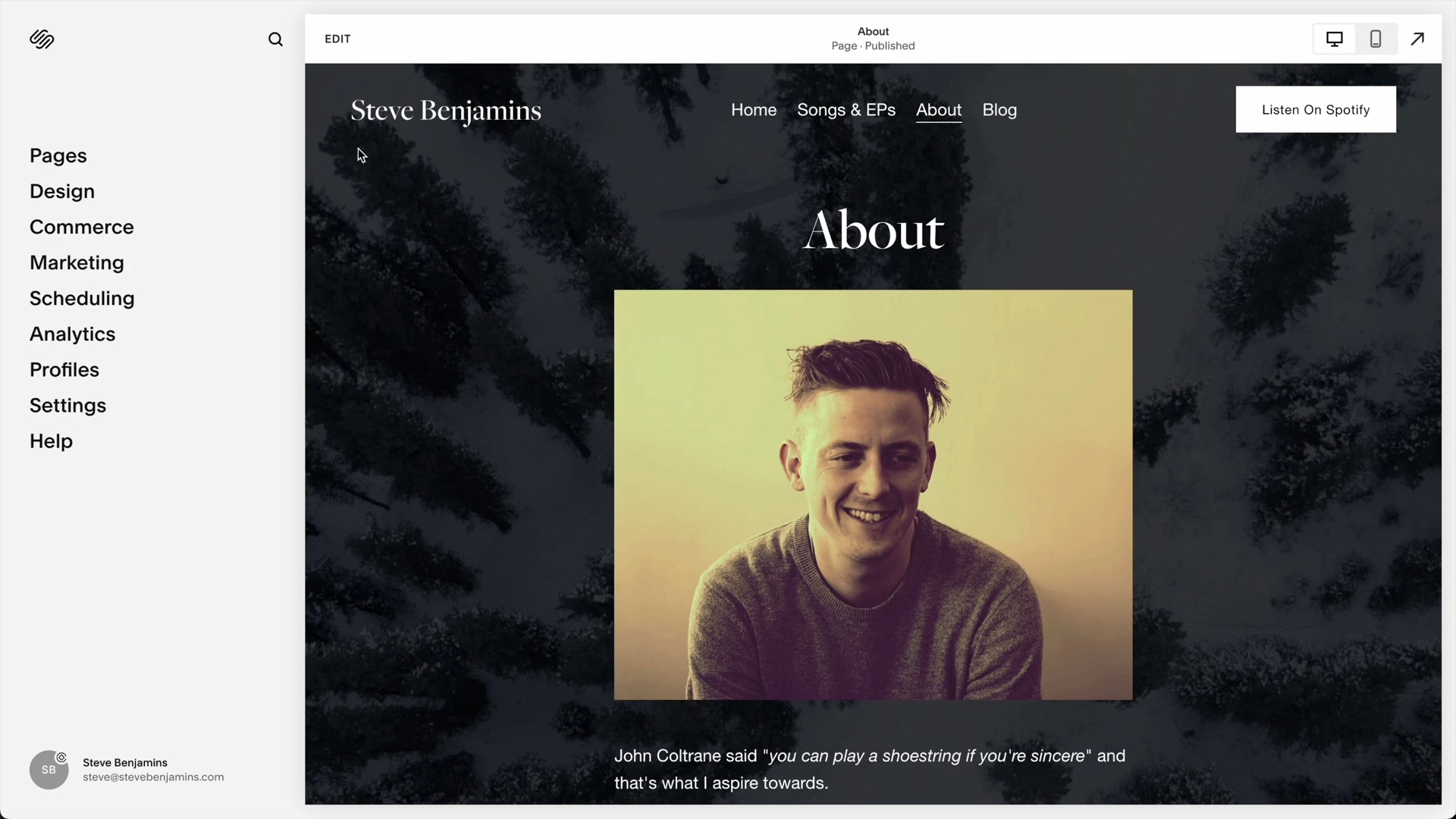
Squarespace is the best all-around website builder for most fitness websites. In fact, many of the best websites featured in our Fitness Website Inspiration collection are built with Squarespace.
We often describe Squarespace as the Apple of website builders. It is intuitive and has polished features for fitness websites. Moreover, it offers beautiful templates, is secure, and includes a customizable drag-and-drop editor to meet most fitness website design needs.

Example of a Squarespace template for a fitness website.
Squarespace has no free plan, but it offers a 14-day free trial. Plans start at $16/month (annual billing). If you plan to sell programs, products, or memberships, Core ($23/month) is usually the best starting point because it removes Squarespace’s 2% transaction fee.
Use code SBR10 for an extra 10% off on all Squarespace plans.
Wix Overview (1:42)
Best for: Gyms, multi-instructor studios, and businesses seeking maximum features and flexibility (and willing to accept a more complex setup).
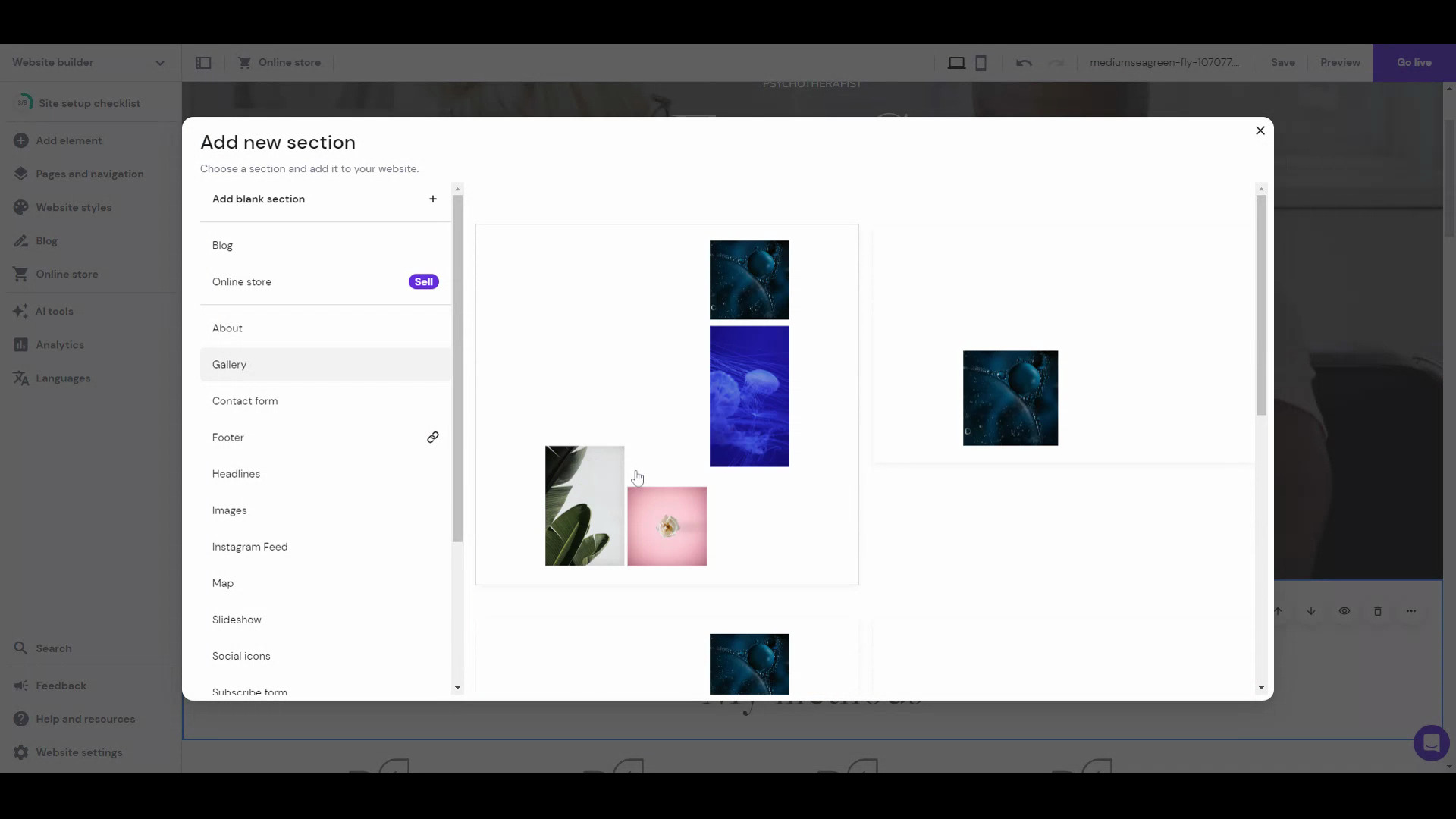
Wix is the most powerful and flexible DIY website builder for fitness businesses. It has advanced scheduling features, branded client apps, deep membership systems, and the largest app ecosystem.
Wix’s defining feature is an unstructured drag-and-drop editor that lets users place any element anywhere on the webpage to pixel-perfect precision. This will give you freedom, but it will also introduce bugs and workarounds that can be very frustrating. Moreover, Wix has an overwhelming number of features and elements that you, as a fitness person, won’t need. Plus, Wix is a bit cluttered compared to Squarespace’s clean, intuitive editor.
Wix offers a free plan for basic site building, though most professionals opt for a paid plan to remove Wix branding and use a custom domain.
For fitness businesses, you must choose a Core plan or higher ($29/month, billed annually) to accept online payments, manage class bookings, and sell memberships. While more expensive than entry-level plans, these tiers include the full “Wix Fit” suite and charge 0% transaction fees on your sales.
Hostinger is the budget winner for fitness websites. It’s ideal for solo trainers and small studios that want a clean site without breaking the bank.
However, it’s too basic compared to others on this list. It doesn’t have the aesthetic or functionality to achieve Squarespace-level web design, nor the feature-rich fitness business platform of Fitune. But for those whose needs are met by its features? An absolute bang for the buck!
A website (content, images included) created by Hostinger’s AI builder on entering a simple prompt.
Hostinger doesn’t have a free plan, but it’s the cheapest builder here.
Plans typically start at $2–4/month, and the Business plan (with bookings) is usually under $5/month on promo.
Best for: Fitness businesses that want an “operations-first” platform (classes, packs, memberships, automations) with a website included.
If you are looking for a platform made for the fitness industry, Fitune is an excellent option. It mainly helps fitness businesses manage their operations. While it has a website builder, it isn’t as effective as those found in dedicated website-building platforms.
Fitune uses an “auto-generation” approach. When you sign up, you get a fully functional website that is already integrated with your schedule, client CRM, and payment processor. It’s significantly faster to set up than Wix or Squarespace because the “fitness logic” (e.g., waiting lists and credits) is built into the system.
However, you can’t customize it much beyond the usual text and image changes—for example, you can’t add a slideshow of before/after images. If you have seen one Fitune website, you have seen them all, aesthetically speaking. Moreover, features such as ecommerce or blogging are either basic or unavailable.
A typical Fitune website layout.
Fitune offers a free starter plan (with 6% transaction fees).
Paid plans typically start at $59 per month (paid annually), which is competitive given that it replaces several third-party tools (such as booking software, video hosting, and email marketing). The most popular plan is the $119/month Plus plan, which includes features ideal for the typical Fitune users.